
xTool Apparel Printer Review: If you run a small apparel business — printing custom T-shirts, hoodies, or branded merchandise — you’ve likely heard the buzz around DTF (Direct-to-Film) printing.
And for good reason.
DTF printing has quickly become one of the most versatile and profitable methods in the apparel industry. It delivers vibrant colors, strong durability, and the flexibility to print on almost any fabric — without the setup complexity of traditional printing methods.
But with so many printers entering the market, one name consistently shows up in conversations among print shop owners and apparel startups: xTool.
In this review, we’ll take a practical, real-world look at the xTool Apparel Printer to answer the question many entrepreneurs are asking:
Is the xTool Apparel Printer the best DTF printer for small businesses?
Is it the best DTF printer for small businesses?
We’ll evaluate:
- Print quality
- Setup and ease of use
- Production speed
- Cost per print
- Real-world business applications
So you can decide whether it’s the right investment for your printing operation.
What Is the xTool Apparel Printer?
xTool is widely known for its precision laser engravers and cutters, but the brand has recently expanded into the apparel printing space with its dedicated DTF printing system.
Unlike many entry-level DTF setups that rely on converted Epson inkjet printers, the xTool apparel printer is purpose-built for DTF workflows.
That distinction matters.
Converted printers often require heavy calibration, manual tweaks, and ongoing troubleshooting. In contrast, the xTool system is designed to provide a more stable, plug-and-print experience for small businesses.
Key specifications include:
- Print width: up to 13 inches — ideal for apparel gang sheets
- Ink configuration: CMYK + White for printing on light and dark fabrics
- RIP software compatibility: supports professional solutions like Cadlink Digital Factory
- Compact footprint: suitable for home studios and small print shops
- Roll-to-roll film feeding: enables continuous production runs
For entrepreneurs entering the apparel printing market, this setup offers a balanced combination of professional capability and manageable complexity.
Print Quality: Does xTool Deliver Professional Results?
Print quality is ultimately what determines whether customers come back.
In testing across cotton, polyester, and cotton-poly blends, the xTool apparel printer produced consistently sharp and vibrant transfers.
Fine details such as:
- small typography
- gradient graphics
- complex logos
were reproduced clearly without noticeable bleeding or pixel distortion.
Color vibrancy was particularly strong on dark garments, which is often where lower-cost DTF systems struggle.
White Ink Performance
White ink is one of the most critical — and often problematic — elements of DTF printing.
It forms the underbase layer that allows colors to appear vivid on darker fabrics.
The xTool system includes automated white ink circulation and agitation cycles, helping prevent common issues such as:
- pigment settling
- clogged print heads
- inconsistent opacity
For small businesses that cannot afford frequent downtime, this reliability is a major advantage.
Wash Durability
Durability testing on 100% cotton garments showed strong results.
After 30 wash cycles, transfers displayed:
- minimal fading
- no visible cracking
- good stretch resistance
When paired with quality DTF powder adhesive and proper heat press settings, the finished prints can rival the durability of screen-printed garments.
Print quality rating: 9/10 — suitable for retail apparel, branded merchandise, and sportswear.
Speed and Production Throughput
For small businesses, production speed directly impacts profitability.
The xTool apparel printer offers output speeds that comfortably support low-to-mid-volume production environments.
Typical performance:
| Output Type | Speed | Use Case |
| Single 13″ transfer | ~90 seconds | One-off custom orders |
| Full gang sheet (13″ × 19″) | 3–4 minutes | Multiple designs |
| Continuous roll printing | Up to 20 sq ft/hour | Bulk production |
For a shop producing 20–50 orders per week, this level of throughput is generally more than sufficient.
Where the printer really shines is gang sheet efficiency.
By nesting multiple designs on a single sheet of film, you reduce:
- film waste
- ink consumption
- cost per transfer
This is one of the key drivers behind the strong margins associated with DTF printing.
Setup and Ease of Use
One of the biggest barriers to entering the DTF market is the technical learning curve.
Converted printer setups can require days of calibration, driver adjustments, and troubleshooting.
The xTool system aims to simplify that process.
Out-of-Box Experience
From unboxing to first successful print, the setup process typically takes about two hours, including:
- driver installation
- RIP software configuration
- basic calibration
Documentation and technical support resources are designed to help new users get operational quickly.
Integration with RIP Software
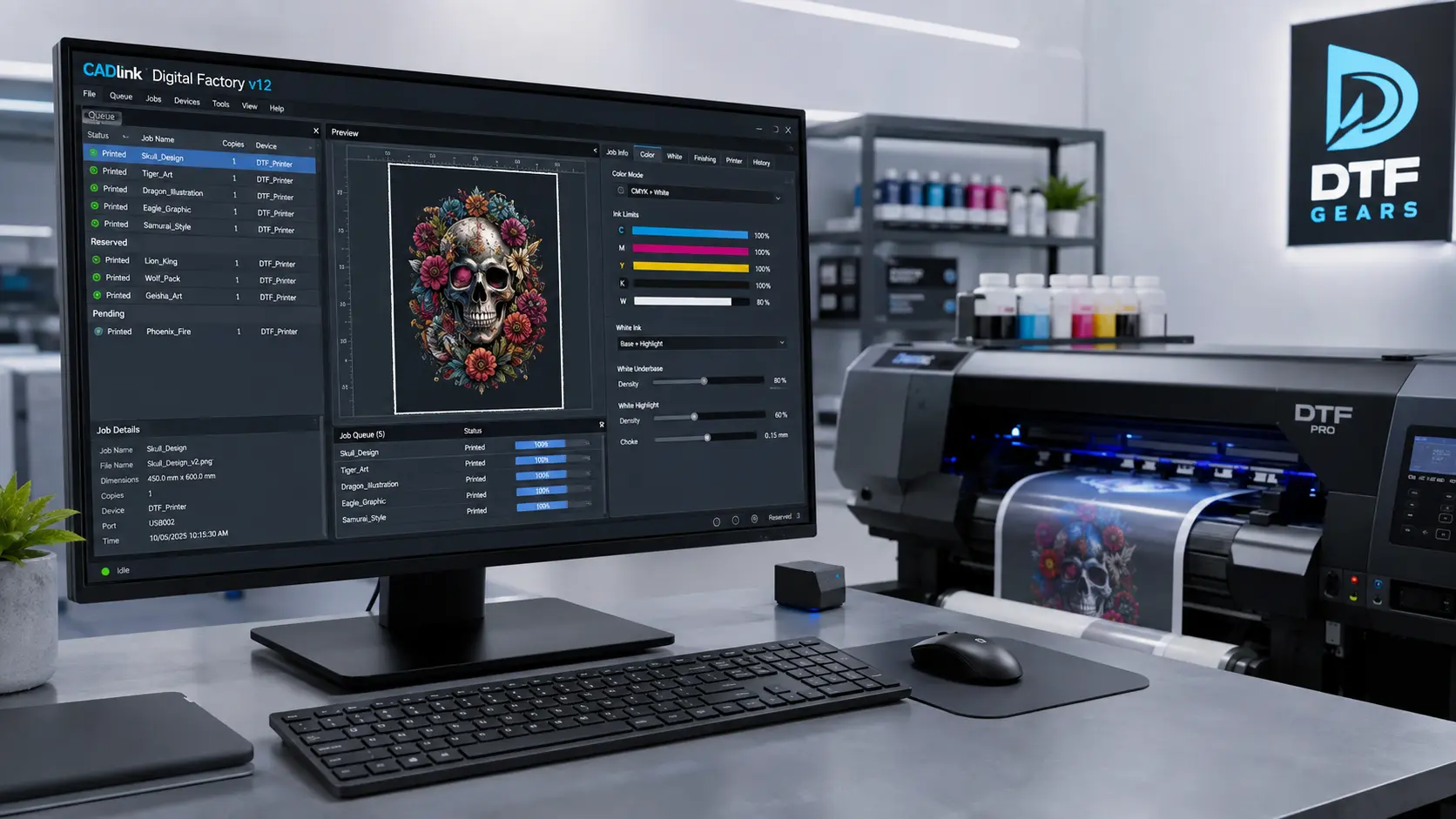
Professional DTF printing relies heavily on RIP (Raster Image Processor) software.
A RIP system handles essential tasks such as:
- white ink layering
- color management
- print mirroring
- gang sheet optimization
- ink density control
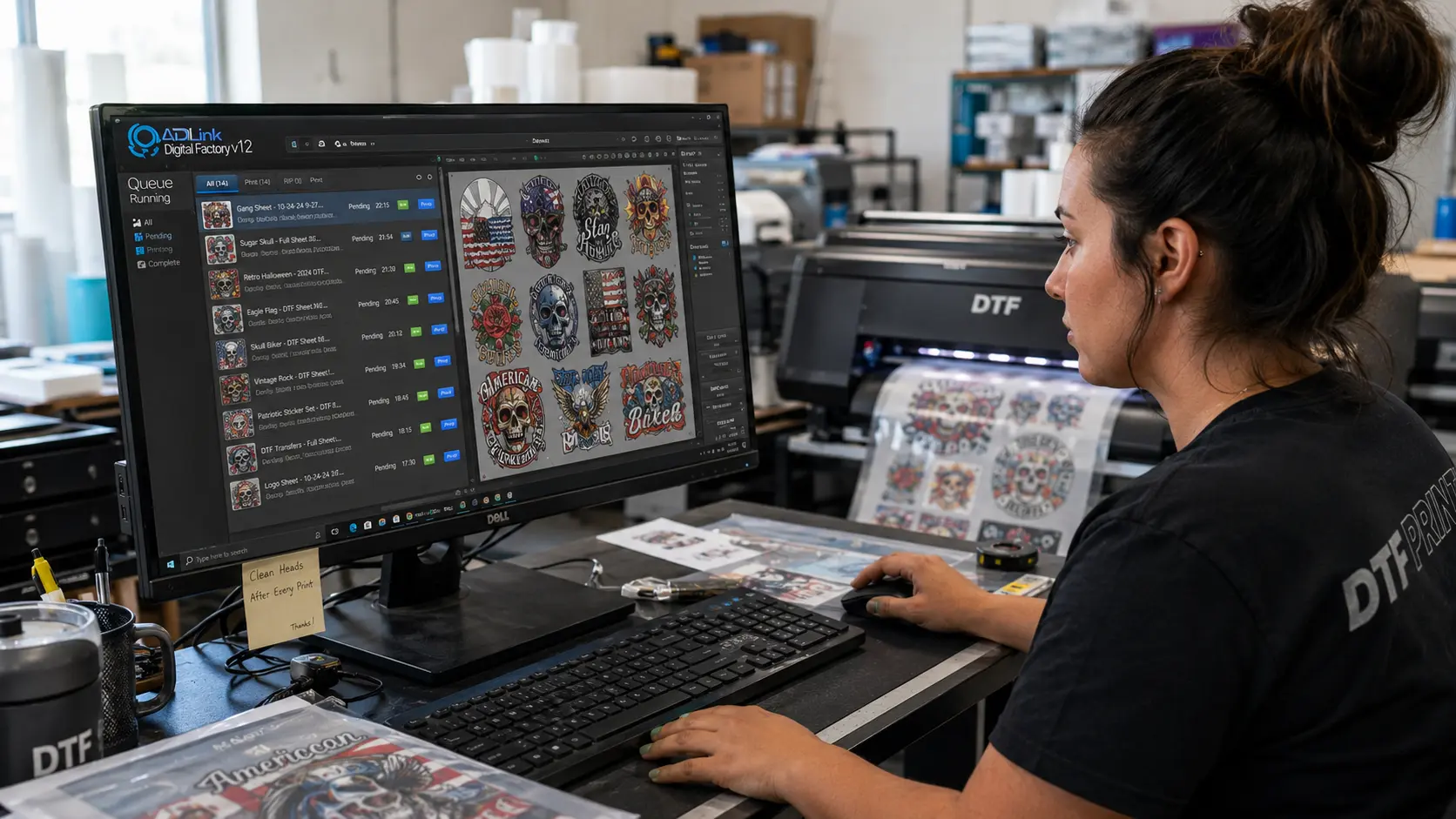
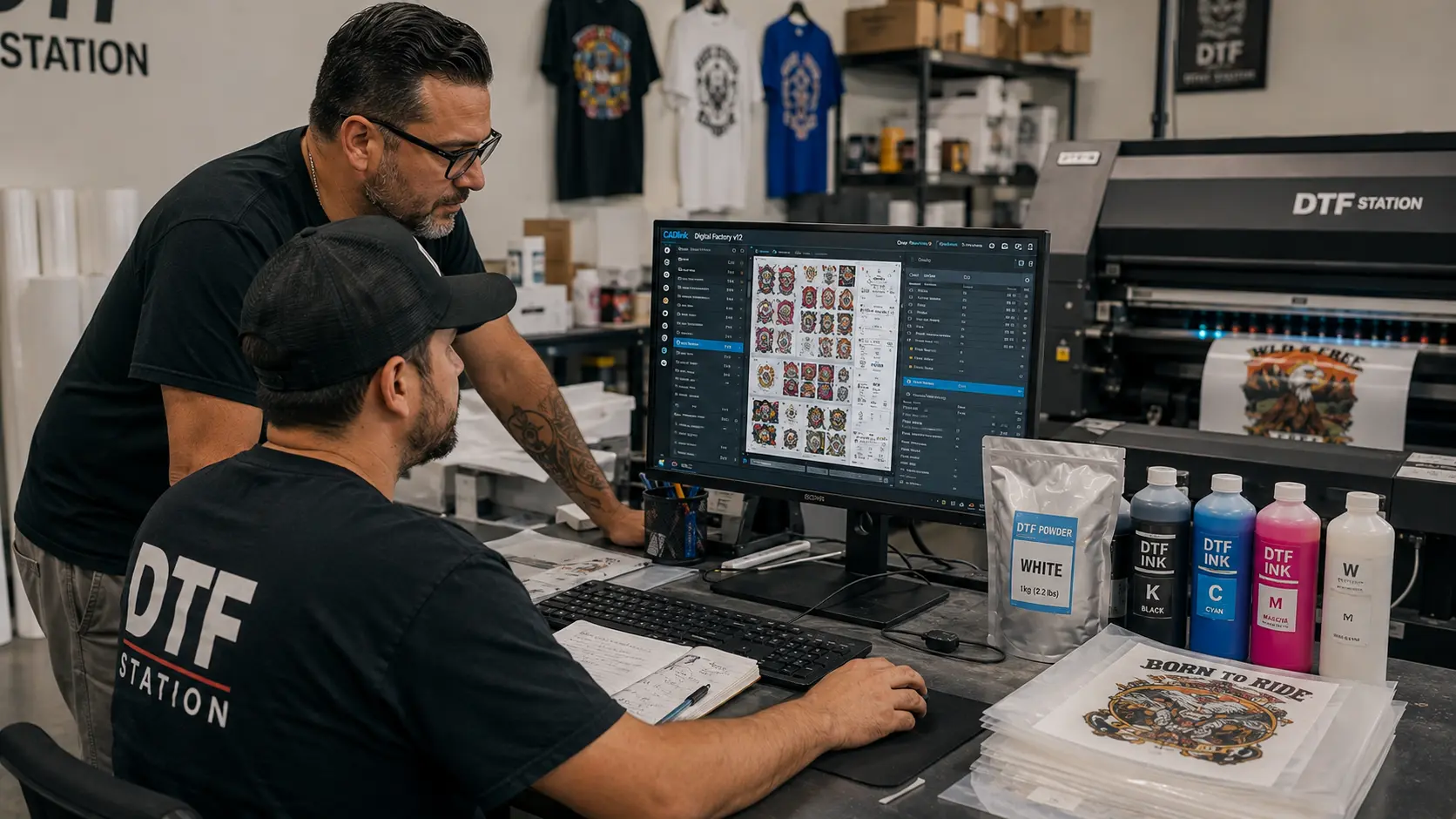
The xTool apparel printer integrates smoothly with Cadlink Digital Factory, one of the most widely used RIP platforms in the DTF industry.
Using a proper RIP workflow helps ensure:
- consistent color output
- precise white underbase control
- efficient job management
Real-World Business Applications
The xTool apparel printer is particularly well suited for several common small-business scenarios.
Custom Merchandise for Local Brands
DTF allows profitable printing of single-piece orders, making it ideal for small clothing labels or influencer merch.
Sports Teams and Clubs
DTF handles multi-color graphics, player numbers, and logos in a single print process, eliminating the complexity of traditional methods.
Print-on-Demand Businesses
Etsy sellers and online apparel stores can bring production in-house, reducing fulfillment costs and turnaround time.
Event and Promotional Apparel
School events, corporate promotions, and charity runs often require moderate quantities with fast turnaround, which fits well within the printer’s production capacity
Pros and Cons
Pros
- Designed specifically for DTF printing workflows
- Strong white ink management system
- Compatible with professional RIP software
- Compact footprint suitable for small studios
- High-quality prints on both light and dark fabrics
Considerations
- Higher upfront cost compared with converted printers
- Requires a reliable heat press for final transfers
- RIP software typically involves an additional cost
- White ink requires periodic maintenance cycles
How It Compares to Other DTF Options
| Printer | Best For | Setup Difficulty |
| xTool Apparel Printer | Small-medium businesses | Easy |
| Epson DTF Conversions | Budget starters | High |
| DTF Station Systems | Large production shops | Moderate |
| Prestige A4/A3 | Hobbyists | Moderate |
For many small business owners, the xTool sits in the sweet spot between affordability and professional performance.
Why RIP Software Matters
A DTF printer alone cannot deliver consistent professional output.
RIP software manages key production variables including:
- white ink density
- color calibration
- print mirroring
- film layout
- job automation
Solutions like Cadlink Digital Factory help ensure repeatable, retail-quality transfers while optimizing ink usage and workflow efficiency.
Final Verdict
If you’re a small business owner looking to enter or scale in the apparel printing market, the xTool Apparel Printer offers a compelling balance of reliability, quality, and ease of use.
It delivers:
- professional-grade print quality
- efficient production speeds
- strong compatibility with industry-standard RIP software
Without requiring the technical complexity often associated with DIY DTF setups.
For entrepreneurs who want a reliable, production-ready DTF system without the headaches of converted printers, the xTool apparel printer is one of the strongest options available.