
Scroll through any custom-apparel community online and three letters keep surfacing: DTF. Short for Direct-to-Film, this printing method has quietly eaten a giant slice of the custom T-shirt, hoodie, and tote-bag market — and for good reason. It’s faster to set up than screen printing, cheaper than embroidery, and produces colours that pop off dark fabric in a way iron-on vinyl just can’t match.
If you’ve ever thought about printing your own designs — maybe for a small business, a school event, or just for the fun of personalising your wardrobe — this guide will explain exactly how DTF works, who it’s for, and what a beginner-friendly setup looks like today.
The one-sentence version: DTF printing lets you print full-colour designs onto a special film, coat them with adhesive powder, cure them with heat, and then press them onto virtually any fabric — cotton, polyester, blends, even leather.
How Does DTF Printing Actually Work?
The process has four simple stages, and the whole thing can happen on a small studio desk:
Step 1 — Print your design onto PET film Your DTF printer lays down CMYK inks plus a white ink base onto a special transparent roll film. The white layer is what makes colours pop on dark garments.
Step 2 — Apply hot-melt adhesive powder While the ink is still wet, you sprinkle adhesive powder over the print. It bonds to the wet ink and nowhere else — so excess powder shakes right off.
Step 3 — Cure in a DTF oven The film goes through a curing oven that melts the powder and bonds it permanently to the ink, creating a flexible, durable transfer.
Step 4 — Press onto fabric Using a heat press for around 15 seconds, the transfer fuses to your garment. Peel off the film and you’re done — a wash-resistant, vibrant print.
Who Is DTF Printing For?
That’s honestly the most exciting part. Five years ago, professional-quality custom printing required a screen-printing shop with thousands of dollars of equipment and serious expertise. Today, a solo creator can run a profitable print-on-demand operation out of a spare bedroom.
Creators and designers — Print your artwork on merch, sell on Etsy or Instagram, and fulfil orders yourself without minimum order quantities.
Small business owners — Custom staff uniforms, branded event merch, and promotional gifts, all produced in-house on demand.
Schools and clubs — Team jerseys, class T-shirts, and fundraiser hoodies without the lead times or minimum order headaches.
Print-on-demand shops — Build a store and print each item only when it’s ordered, with zero inventory risk.
DTF vs. Other Printing Methods
Before you invest in any equipment, it’s worth understanding how DTF stacks up against the alternatives.
Screen printing delivers great colour on dark fabric but demands minimum order quantities of 12–24 units and a complex setup process. HTV vinyl is easy and flexible but lacks the photographic colour depth DTF achieves. DTG (Direct-to-Garment) requires a pre-treatment step on every garment and is notoriously prone to clogging issues. Sublimation produces brilliant results but is restricted to light-coloured polyester fabrics only.
DTF’s biggest edge is its versatility — dark fabrics, light fabrics, cotton, polyester, mixed blends — combined with the fact that you can print one unit just as easily as a hundred.
“The moment I realised I could print a single custom hoodie at home and sell it for the same margin as a screen printer doing 500 units — that’s when the business started making sense.” — Small business owner, Procolored community review
What Equipment Do You Actually Need?
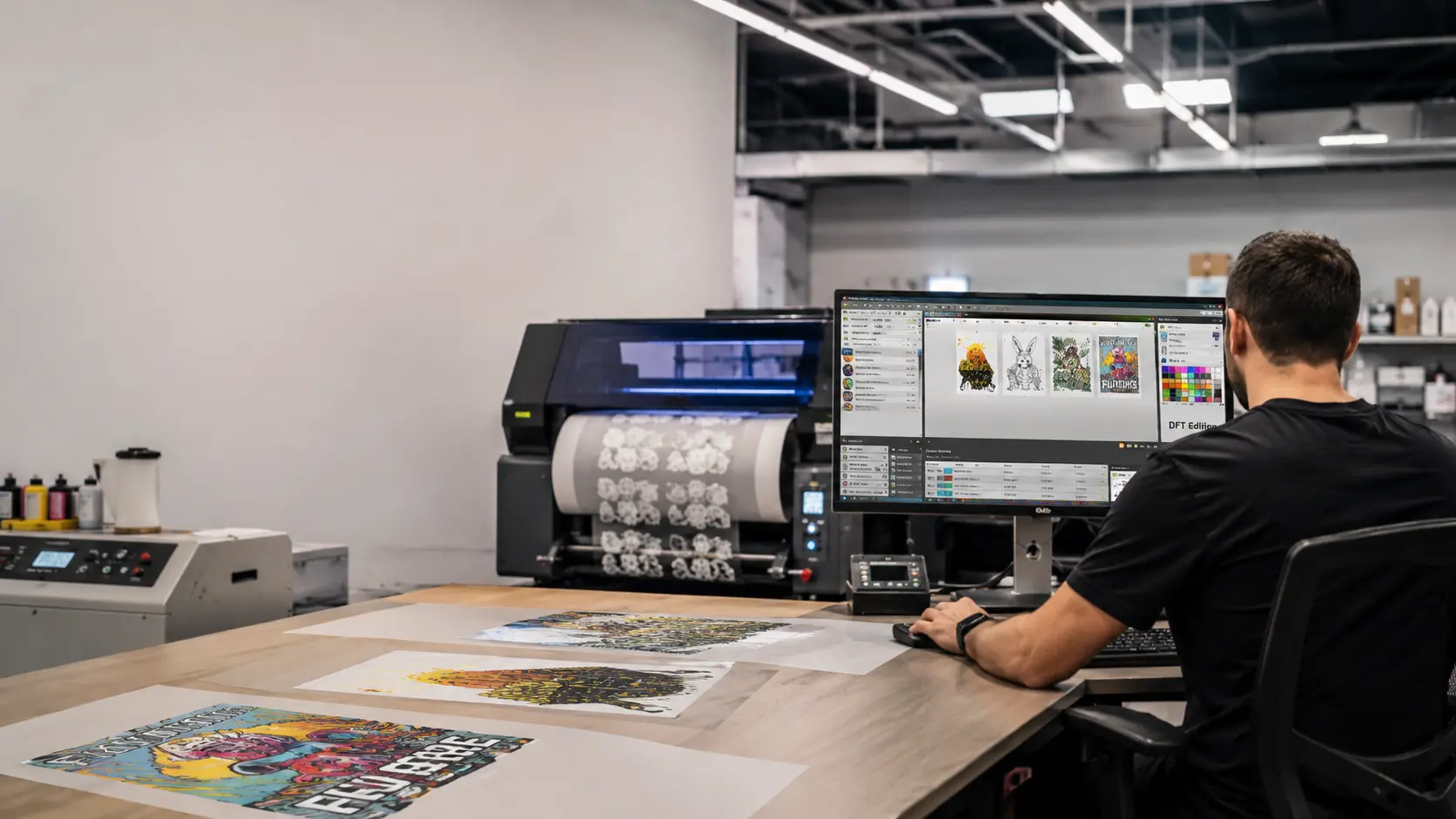
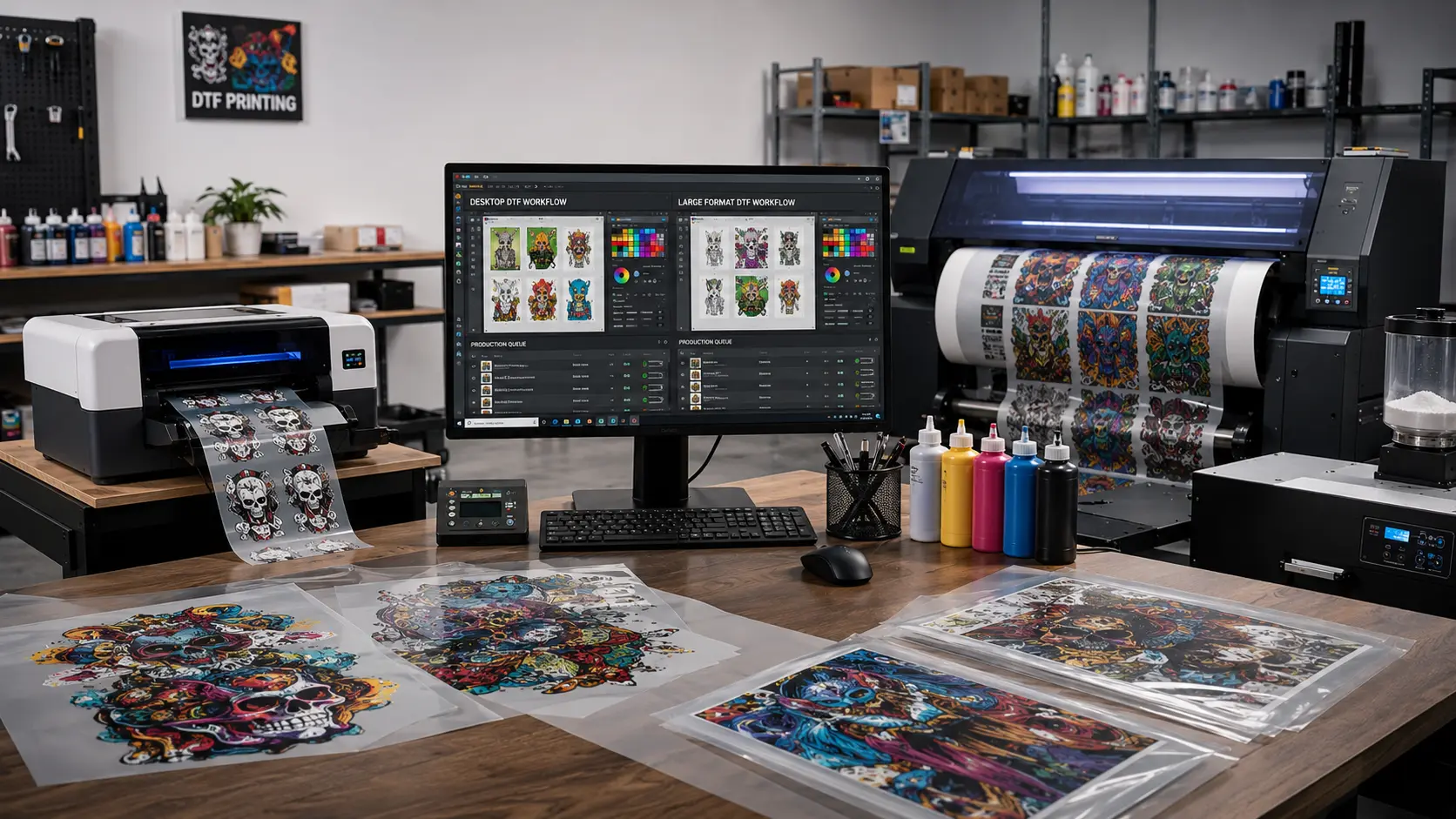
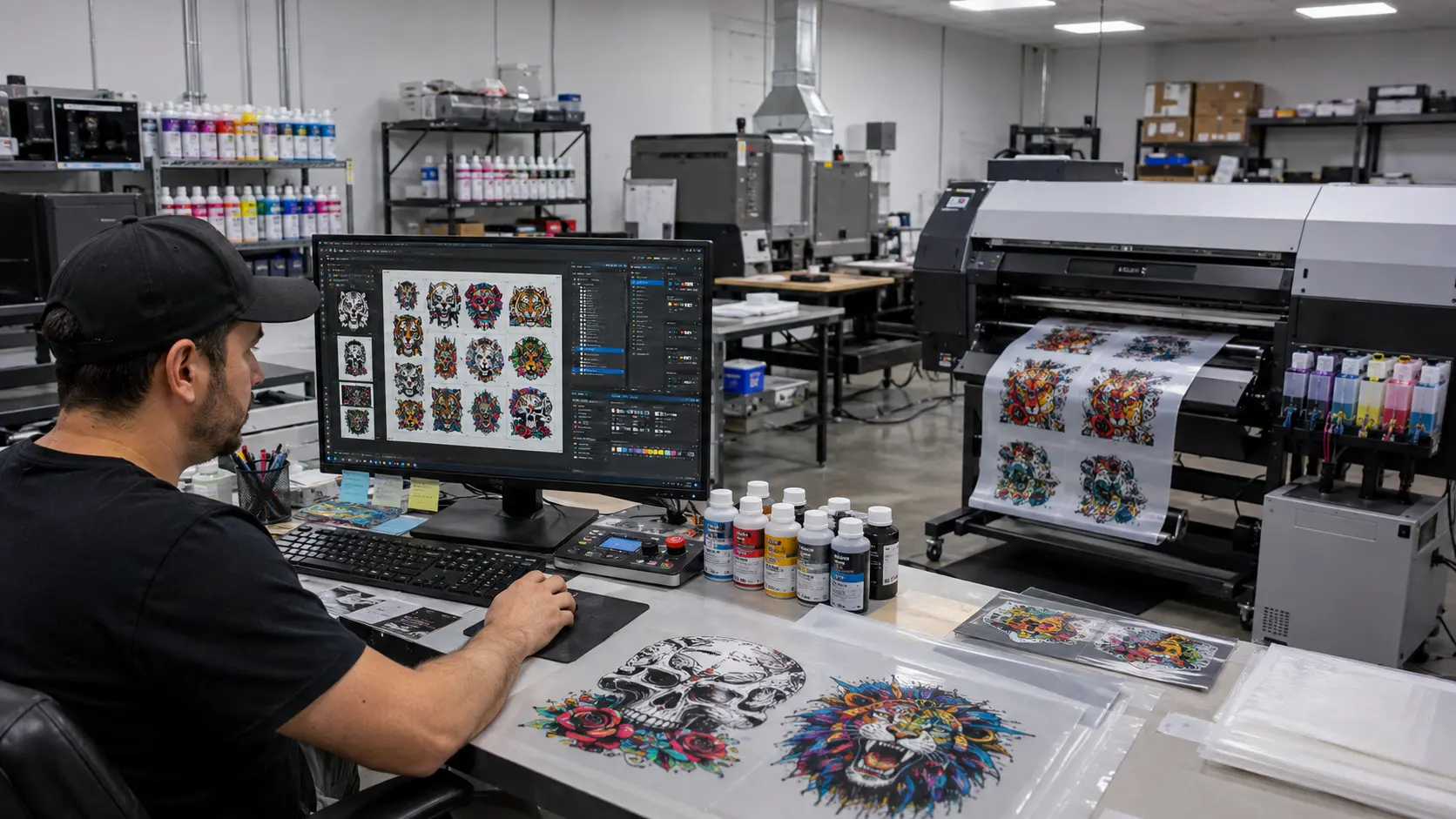
The barrier to entry is lower than most people expect. A basic DTF setup consists of just three things: a DTF printer with white ink capability, a curing oven to set the adhesive powder, and a heat press for transferring onto garments.
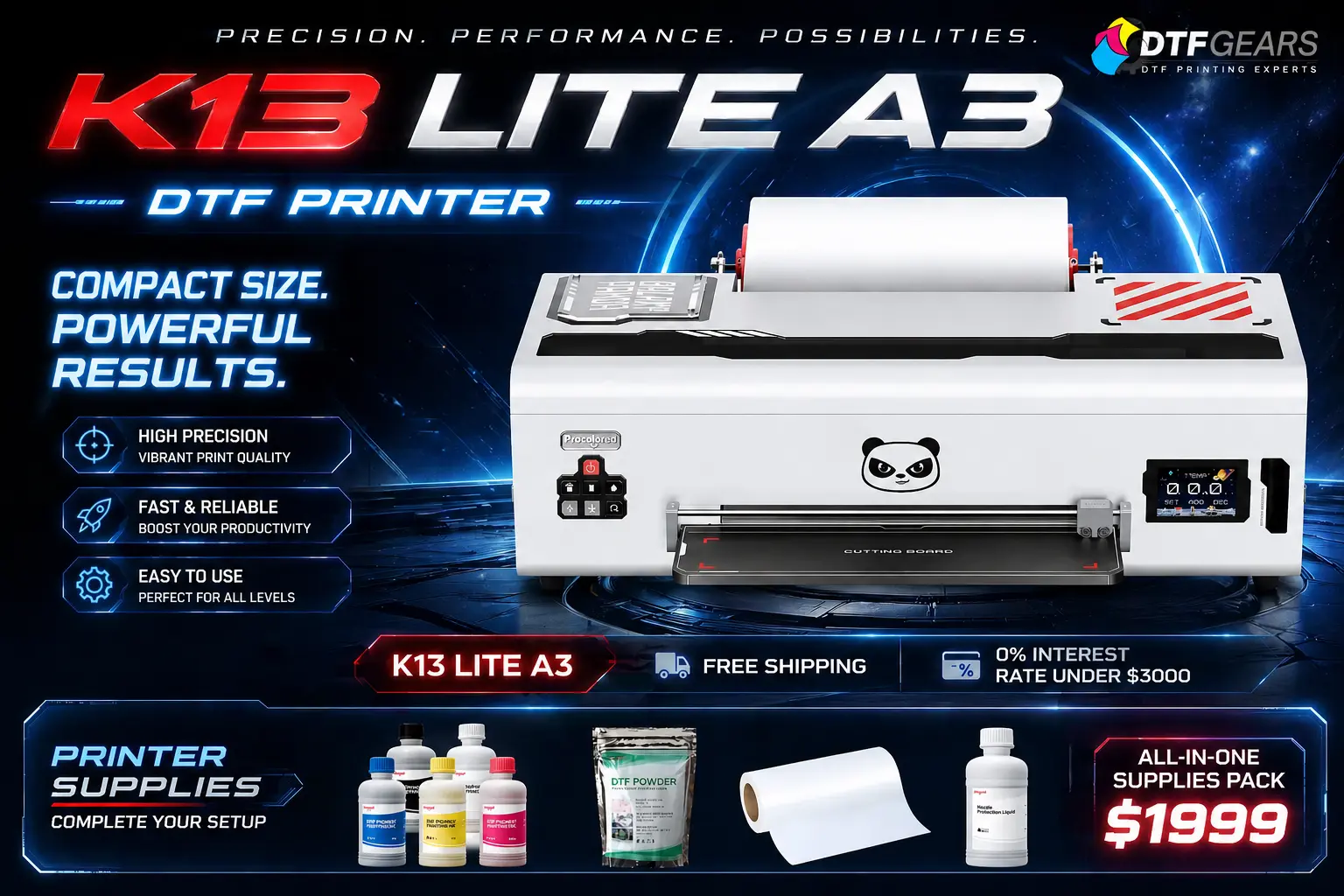
Modern entry-level machines like the Procolored K13 Lite bundle the printer and oven together, further simplifying what you need to buy and learn. The K13 Lite is specifically engineered for people starting out — it features one-tap ink pumping, automatic printhead cleaning every 10 hours, and a beginner-friendly touch interface that takes the guesswork out of setup entirely.
Key specs at a glance: A3 print width (13 inches), five ink channels (CMYKW), G7-certified colour accuracy, and an infrared printhead safeguard system that detects issues before damage occurs.
Is DTF Printing Worth It?
For the right use case, absolutely. If you’re printing a few dozen to a few hundred shirts per month, the economics are hard to argue with. Custom transfer printing services charge upwards of $1–2 per transfer. Doing it in-house brings that cost down dramatically and gives you full creative control, no minimum orders, and same-day turnaround.
The technology has also matured significantly. Older DTF printers were notorious for clogged printheads and high maintenance costs. The K13 Lite addresses this directly with automatic cleaning cycles, an infrared safeguard system, and a smokeless oven that makes running the machine at home genuinely comfortable.
Ready to explore the K13 Lite? Browse the full product range at DTF Gears and see which bundle fits your setup — whether you’re starting from scratch or upgrading your studio.