
Thinking about buying a Procolored DTF printer?
Before you invest, here’s the truth — it’s one of the most accessible DTF machines in the market, but it’s not a “plug-and-play” device.
This guide breaks down real specs, actual performance, running costs, and honest pros & cons so you can make a smart decision.
What Is a Procolored DTF Printer?
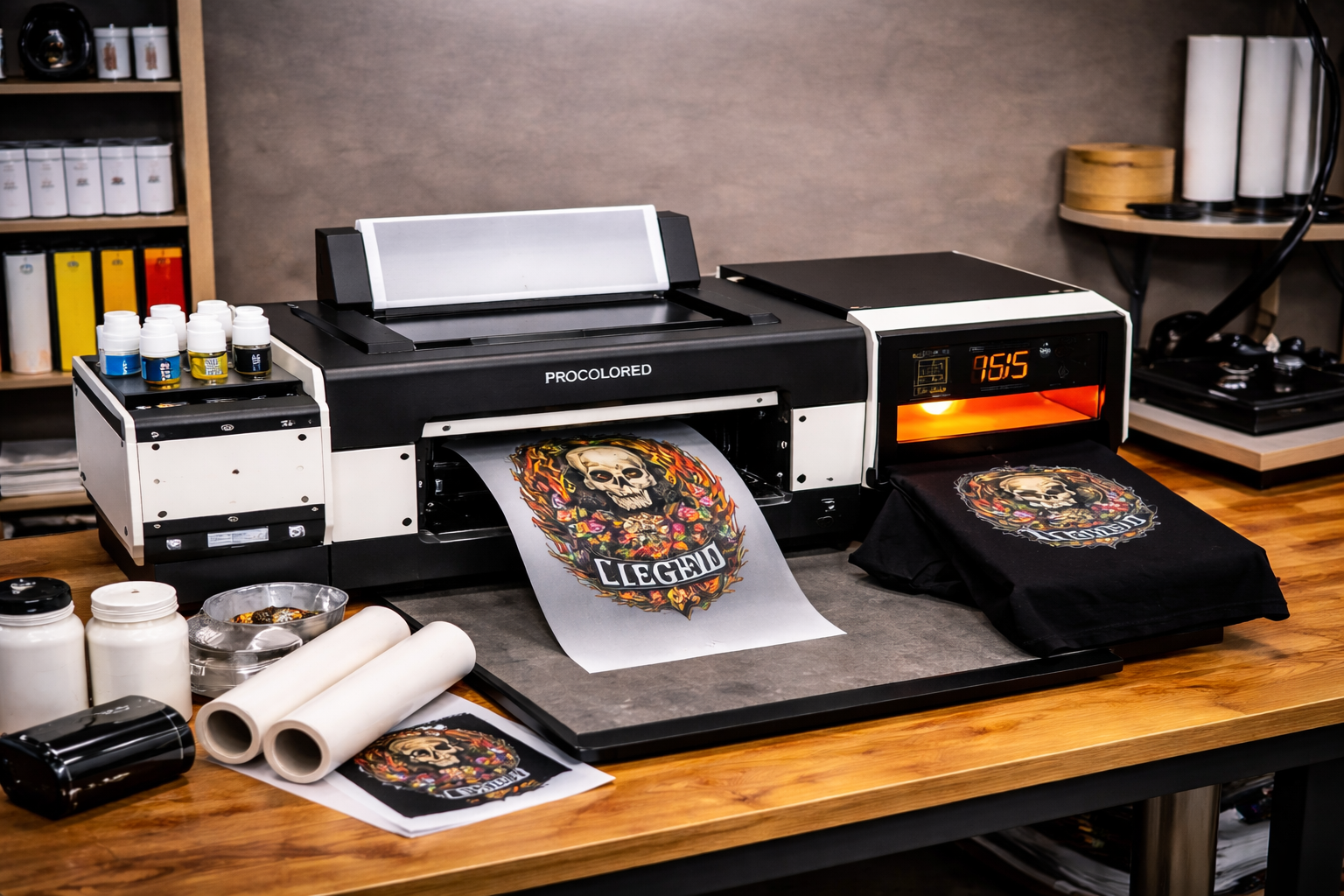
A Procolored DTF printer is a Direct-to-Film printing machine that prints designs onto PET film, which are then transferred onto fabric using adhesive powder and heat.
How the Process Works
- Create design in RIP software
- Print on PET film
- Apply adhesive powder
- Cure using oven
- Transfer using heat press
This method works on:
- Cotton
- Polyester
- Blends
- Dark & light garments
That’s why DTF printing is growing faster than traditional printing methods.
Real Specifications (Based on A3 XP600 Models)
Let’s focus on actual machine details instead of marketing claims.
Core Hardware
- Printhead: XP600 (6-channel)
- Ink System: CMYK + White
- Resolution: Up to 1440 DPI
- Ink Drop Size: 4.5 picoliters
Smaller ink drops = sharper prints and smoother gradients.
Print Size & Speed
- Max print width: 13 inches (A3)
- Output:
- ~6–8 A4 prints per hour
- ~7 minutes per print
Best suited for small to medium production.
Maintenance System
- Auto cleaning cycles (12 / 24 / 36 hrs)
- White ink circulation system
This is essential because white ink clogging is the most common issue in DTF printing.
Key Features That Actually Matter
1. Automatic Cleaning System
Reduces clogging and improves printhead life.
2. White Ink Circulation
Prevents sediment buildup — critical for long-term use.
3. Laser Film Detection
Protects the printhead from damage caused by uneven film.
4. RIP Software Support
Controls:
- Color accuracy
- White ink layering
- Print alignment
What Comes in a Typical Procolored Setup?
Most bundles include:
- Printer unit
- CMYK + White inks
- PET film
- Adhesive powder
- RIP software
- Maintenance tools
This makes it a ready-to-start solution for beginners.
Real Performance: What to Expect
What Works Well
- Sharp, high-resolution prints
- Vibrant color output
- Works on multiple fabrics
- Low entry cost
Ideal for startups and small businesses.
Real Challenges (Important)
- Requires daily maintenance
- White ink clogging risk
- Learning curve with RIP software
This is not a passive machine—you must actively maintain it.
Who Should Buy a Procolored DTF Printer?
Best For:
- Custom t-shirt businesses
- Print-on-demand startups
- Home-based printing setups
- Small apparel brands
Who Should Avoid It?
Avoid if you:
- Want zero maintenance
- Need high-volume industrial output
- Don’t have time for daily upkeep
Pro Tips to Get the Best Results
- Run daily nozzle checks
- Maintain humidity (40–60%)
- Use high-quality PET film
- Never skip cleaning cycles
Most printer issues come from poor maintenance—not the machine itself.
A Procolored DTF printer is a strong entry-to-mid-level solution for the custom printing business.
Why It Works:
- Affordable investment
- Professional print quality
- Beginner-friendly setup
What You Must Handle:
- Daily maintenance
- Moderate production speed
If you treat it like a business tool, it delivers solid ROI.
The price of a Procolored DTF printer in the USA typically ranges between $2,500 to $6,500, depending on the model, print size (A4 or A3), and whether it comes as a complete bundle with accessories like a curing oven and heat press.
In the US market, Procolored DTF printers are priced based on configuration:
A4 models (entry-level): $2,500 – $3,500
A3 models (mid-range): $3,500 – $5,000
Advanced bundles (with shaker/oven): $5,000 – $6,500+
Prices may vary depending on included equipment and supplier.
Yes, a Procolored DTF printer is suitable for beginners because it often comes as a ready-to-use bundle with software, inks, and basic tools. However, users should be prepared for daily maintenance and a short learning curve, especially with RIP software and white ink handling.