
If you’re researching the xTool DTF printer price, you’re likely close to investing in a DTF printing setup for your apparel or merch business.
DTF printing has exploded in popularity because it allows businesses to print high-quality designs on almost any fabric without the complexity of traditional screen printing.
But before purchasing a printer, there’s one important thing many buyers overlook:
the real cost of a DTF printer goes beyond the machine itself.
Ink, film, software, and maintenance all contribute to the total cost of ownership.
At DTFGears, we regularly help apparel businesses understand the true investment behind DTF printing, so they can choose the right equipment without unexpected costs.
This guide breaks down what the xTool DTF printer price really means in 2026, including the costs many sellers don’t talk about.
Understanding the xTool DTF Printer Price in 2026
The xTool DTF printer price sits in the mid-range category of DTF machines, making it attractive for startups, custom apparel brands, and growing print shops.
Unlike many entry-level printers that focus only on affordability, xTool focuses on ease of use, automation, and reliability.
This is why many small businesses researching DTF printing often compare xTool with other entry-level machines before making a final decision.
Through our experience working with print businesses at DTFGears, we’ve seen that buyers usually choose xTool when they want a balance between cost, performance, and ease of setup.
Why the Printer Price Is Only Part of the Investment
One of the biggest misconceptions in DTF printing is that the printer price tells the whole story.
In reality, a complete DTF setup includes several essential components that work together to produce high-quality transfers.
These include:
- DTF ink
- PET transfer film
- adhesive powder
- RIP printing software
- maintenance supplies
Each of these plays a role in determining your long-term operating costs.
Many experienced print shops working with DTFGears emphasize that understanding these costs early helps businesses avoid unexpected expenses later.
Consumables: The Real Cost Behind Every Print
Every DTF print requires consumables, which are the materials used during the transfer process.
The most important ones include DTF ink, PET transfer film, and adhesive powder.
These materials are relatively affordable per print, which is one reason DTF printing has become so popular among:
- apparel startups
- custom merch brands
- online clothing businesses
Many businesses sourcing supplies from DTFGears find that choosing high-quality consumables helps maintain consistent print quality and reduces wasted prints.
Over time, using reliable materials can significantly improve overall production efficiency.
Software Costs Many Buyers Forget
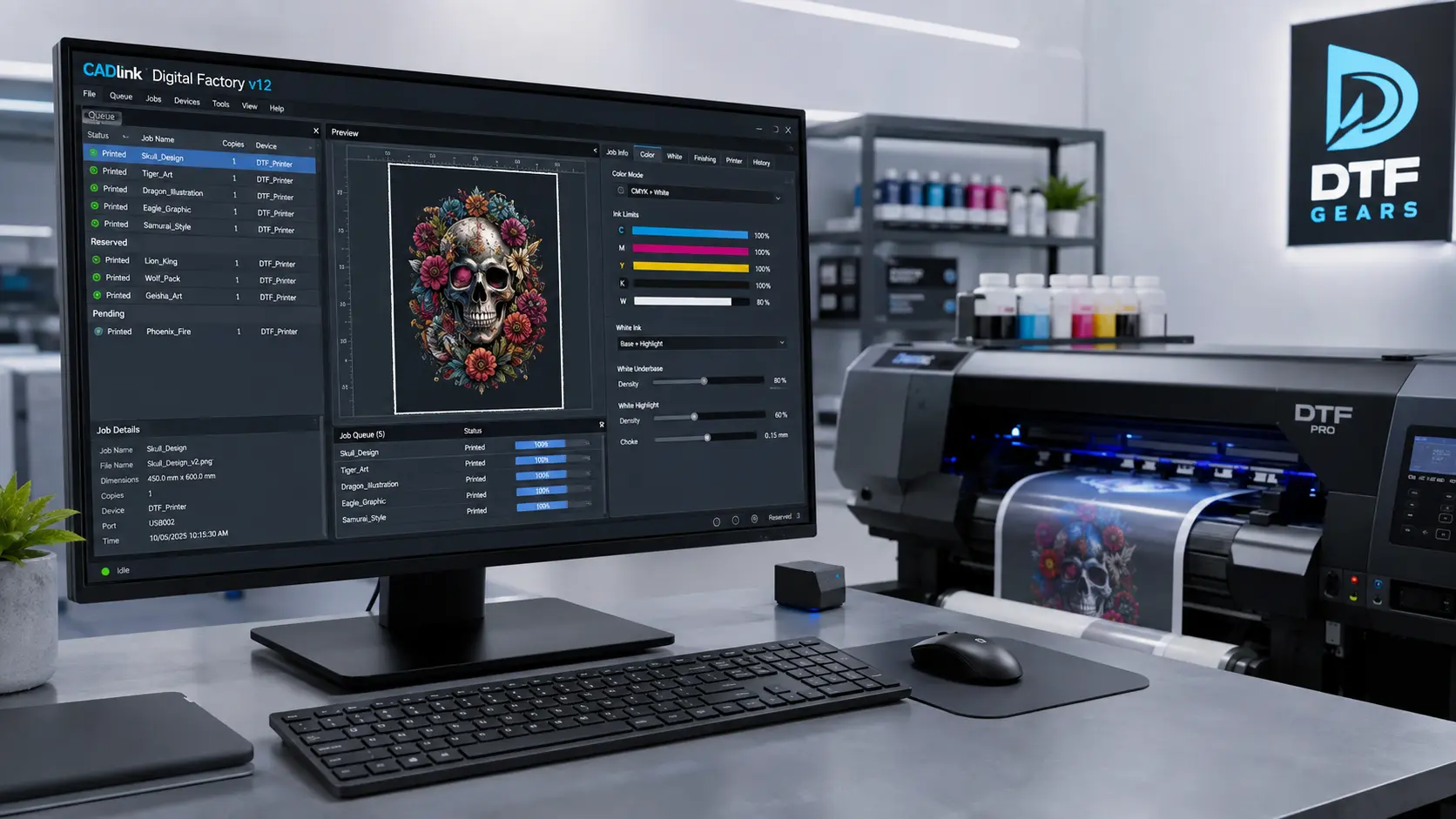
Another important component of the DTF printing ecosystem is RIP software.
RIP software controls critical printing functions such as:
- color management
- white ink layers
- print layout optimization
- ink usage efficiency
Without proper RIP software, achieving professional-quality prints becomes extremely difficult.
This is why experienced DTF suppliers like DTFGears always recommend factoring software compatibility and licensing into the overall printer investment.
Maintenance and Long-Term Reliability
Maintenance plays a major role in the true cost of owning a DTF printer.
Lower-priced machines often require frequent manual cleaning and troubleshooting, which can slow down production.
The xTool system is designed to simplify maintenance and reduce downtime, making it easier for smaller teams to manage daily printing operations.
From what we see at DTFGears, businesses that prioritize reliability over the cheapest upfront option often experience better long-term results.
xTool DTF Printer vs Other Entry-Level DTF Machines
When buyers compare xTool DTF printer vs competitors cost, they often find cheaper printers available in the market.
However, these lower-priced machines can sometimes come with challenges such as:
- complicated installation
- inconsistent print quality
- higher maintenance needs
- limited software integration
Many apparel businesses that consult with DTFGears ultimately choose xTool because it offers a more streamlined printing workflow.
This can make a major difference for startups that want to focus on growing their business rather than fixing printer issues.
Who Should Consider an xTool DTF Printer?
The xTool system is often recommended for businesses that want professional results without industrial-level complexity.
It is particularly suitable for:
- custom apparel startups
- print-on-demand stores
- Etsy and Shopify clothing brands
- local print shops expanding into DTF
At DTFGears, we frequently see entrepreneurs adopt DTF printing as a scalable way to launch or grow a clothing brand.
Final Thoughts
Understanding the xTool DTF printer price requires looking beyond the hardware cost.
A successful DTF setup includes:
- the printer itself
- consumables
- RIP software
- ongoing maintenance
When evaluated as a complete system, xTool provides a balanced entry point into DTF printing for modern apparel businesses.
If you’re planning to invest in a DTF printer, working with experienced suppliers like DTFGears can help ensure you choose the right setup, supplies, and workflow for long-term success.
Frequently Asked Questions About xTool DTF Printers
Yes, xTool offers an apparel printer designed for direct-to-film (DTF) printing, allowing users to print designs onto PET film and then transfer them onto garments using a heat press.
DTF technology enables printing on a wide range of fabrics including cotton, polyester, blends, and even darker garments. Many apparel businesses choose this approach because it provides high color vibrancy and durability compared to traditional transfer methods.
At DTFGears, DTF printers like the xTool system are often recommended for businesses looking to start custom apparel production with minimal setup complexity.
The cost of DTF printing per shirt depends on several factors including ink usage, film, and adhesive powder.
For most designs, the average production cost per print typically ranges between $0.60 and $1.50 depending on color coverage and size of the design.
Additional factors that may influence cost include:
- RIP software efficiency
- ink quality
- material wastage
- printer maintenance
Businesses that use high-quality consumables and optimized workflows, such as those available through DTFGears, often achieve more consistent and cost-efficient results.
No, an xTool DTF printer does not print directly onto fabric.
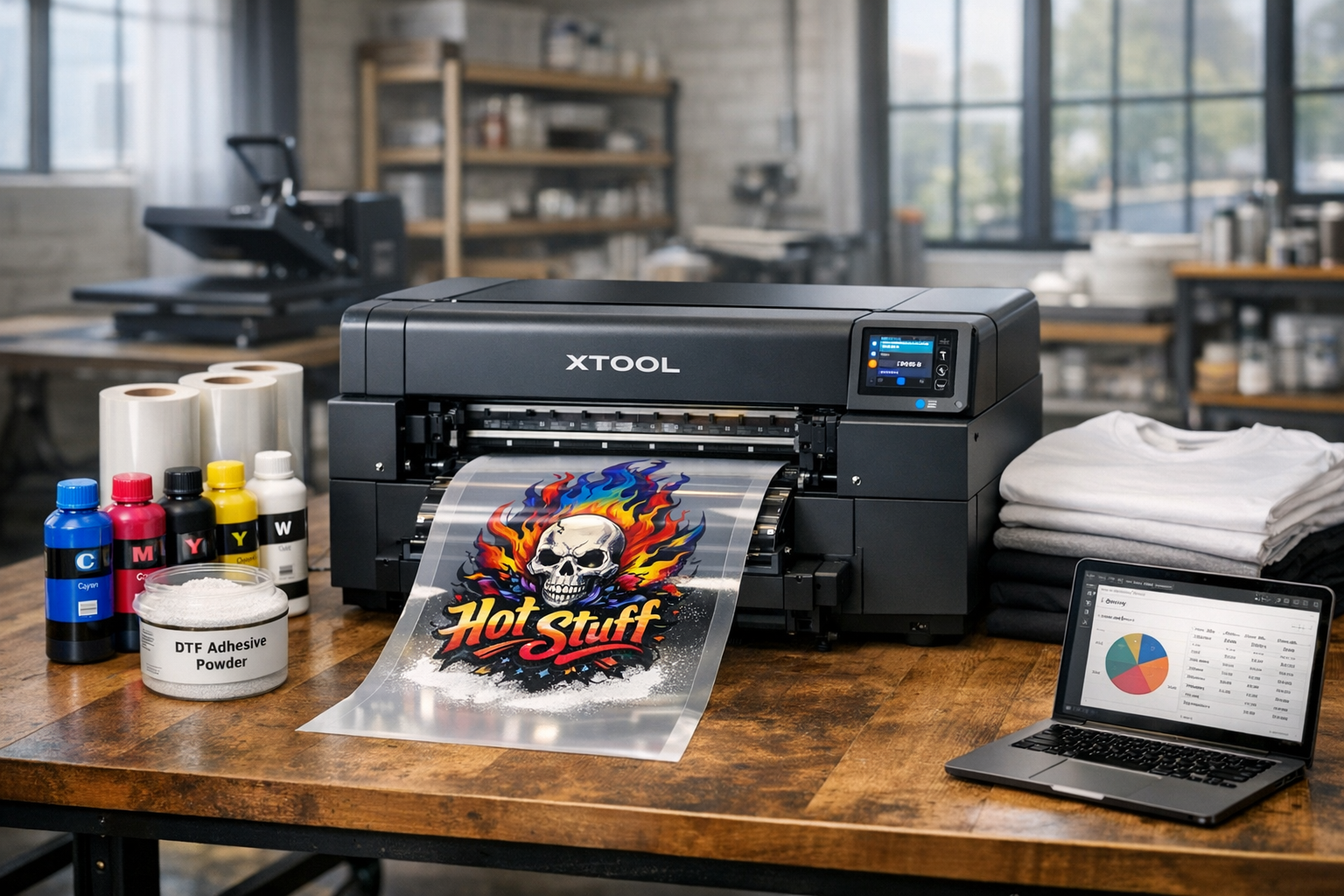
Instead, it prints the design onto DTF transfer film, which is then coated with adhesive powder and cured. After that, the design is transferred to the fabric using a heat press.
This process is what makes DTF printing so versatile because it works on many materials including:
- cotton
- polyester
- blends
- performance fabrics
- dark or light garments
The transfer method also allows businesses to prepare multiple transfers in advance, making it ideal for small-batch or bulk production.
Yes, the xTool apparel printer operates using direct-to-film (DTF) technology.
This means it prints designs onto transfer film instead of printing directly onto garments. The printed film is then applied to clothing using heat and pressure.
DTF printers like this are widely used by:
- custom clothing brands
- print-on-demand businesses
- small print shops
Many entrepreneurs exploring this technology consult with suppliers like DTFGears to understand the complete workflow, including printers, consumables, and RIP software required for professional results.
For small and medium apparel businesses, DTF printing is often more flexible than traditional screen printing.
Screen printing works best for large bulk orders, but it requires setup time, screens, and multiple production steps.
DTF printing allows businesses to:
- print full-color designs easily
- produce single-piece orders
- reduce setup time
- print on many fabric types
Because of this flexibility, many startups working with DTFGears choose DTF printing as their primary method for custom apparel production.